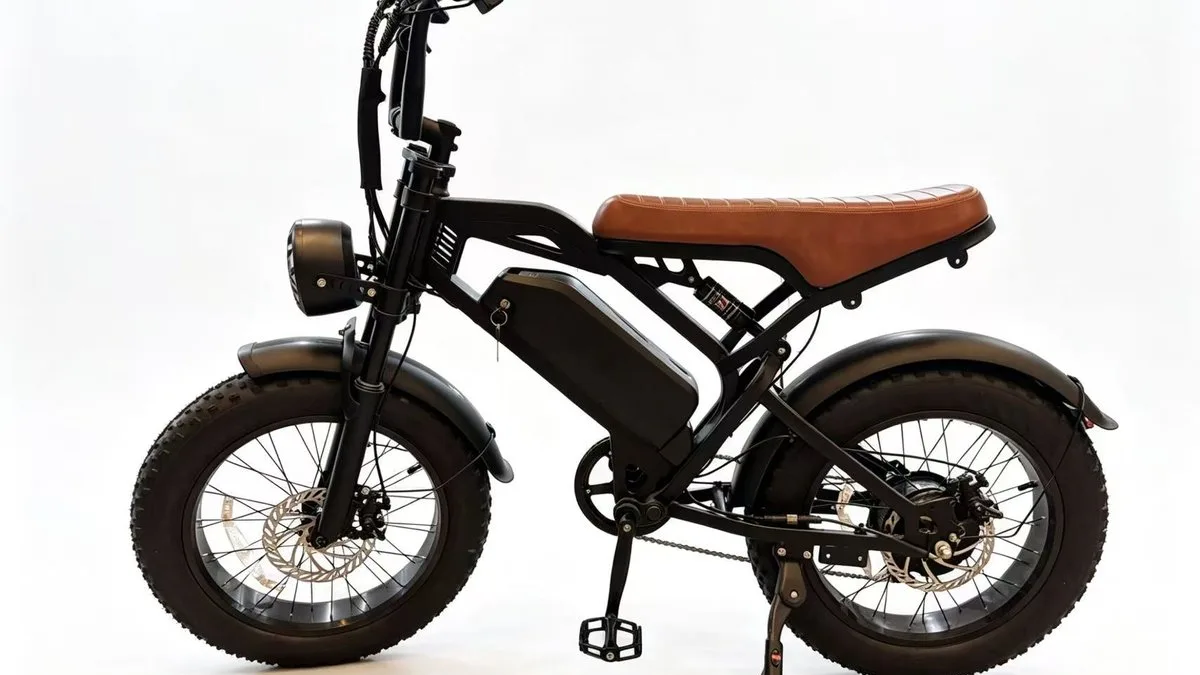
When distributors ask about e-bike spare parts wholesale, the conversation usually starts with price per unit and MOQ. That's the wrong starting point. The orders that actually repeat are the ones where the buyer has already mapped out warranty exposure, battery replacement cycles, and controller availability two years down the line. A container of 200 units at a sharp price is worthless if 15% come back in season two because the display is discontinued and no replacement exists. This article is about the unglamorous side of wholesale — the parts and after-sales terms that keep your service desk quiet and your reorder rate healthy.
## Warranty terms are a parts commitment, not a legal formality
A warranty clause means nothing without a matching spare parts supply plan. Ask any importer in the CIS or Middle East what killed their last supplier relationship, and you'll hear the same story: the frame warranty was 24 months, the motor was 12, but the controller was custom and the factory stopped making it after one season. Before you sign, get the warranty split in writing — frame, motor, battery, controller, display, charger — and demand a committed parts availability window, typically 3–5 years for a serious factory. A realistic warranty structure for a wholesale program looks like 24 months on the frame, 18–24 on the motor, 12–18 on the battery with a capacity retention threshold (usually 70% of rated capacity), and 12 months on electronics. If a supplier won't put a parts-availability period in the contract, treat the warranty as marketing. This is also where model-specific parts matter: a platform like the JIUYUE GT600-20 Pro uses a standardized controller and display family, which means replacement boards stay orderable long after the model itself is superseded — a detail worth more than a 3% price discount.
## The battery lifecycle question buyers keep asking
"How long will the battery actually last, and what do I do when it doesn't?" — this is the single most common question in distributor forums, and it's the one that decides whether your after-sales budget survives. A 48V 20Ah pack rated for 800 cycles at 80% depth of discharge will typically deliver 2–3 years of daily commuting before capacity drops below 70%. In hot markets — Gulf states, parts of South America — expect that to shorten by 20–30% unless the BMS has proper thermal management. For wholesale buyers, the practical answer is to negotiate a spare battery allocation in the original order: 3–5% of unit volume as loose packs, plus a commitment that the same cell format and BMS connector stay available for at least three years. If the factory switches cell suppliers or BMS boards mid-contract without notice, your customers' replacement packs won't fit. Ask for the battery's UN38.3 test report and the cell datasheet up front; a supplier who hesitates on either is a risk you don't need.
## Controllers, chargers, and the small parts that stop a fleet
A fleet doesn't stop because a frame cracks — it stops because a $12 charger died or a display connector corroded. For e-bike spare parts wholesale programs, the parts that move fastest are chargers, controllers, displays, throttles, PAS sensors, and brake pads. Smart buyers build a service kit into every container: roughly 2–3% of unit count in mixed small parts, weighted toward whatever the local climate punishes most (humidity kills connectors, dust kills throttles). Standardize where you can. A model like the JIUYUE X5 Pro shares its charger spec and display protocol with several other platforms in the same factory line, so one spare-parts SKU covers multiple models — that's how you keep a service operation lean without holding 40 different part numbers. Ask your supplier for a compatibility matrix before the first order, not after.
## Certification and import rules change the parts math
"Do I really need UL 2849 to sell in the US, and does it apply to spare parts?" — yes to the first, and partly to the second. UL 2849 covers the complete electrical system, and a replacement controller or battery that isn't certified to the same standard can void the original certification and create liability. In the EU, EN 15194 applies to the whole e-bike, and spare batteries must carry the same UN38.3 and CE markings as the originals. For CIS importers, EAC certification covers the complete product, and shipping loose batteries separately triggers dangerous-goods paperwork that catches first-time buyers off guard. Duty rates vary widely — around 6–8% into the EU for complete e-bikes, higher in some South American markets, and battery cells often attract different treatment than assembled packs. Build these costs into your spare-parts pricing from day one, because a warranty replacement that crosses a border twice can cost more than the part itself.
## What MOQ and lead time should you actually expect?
"What MOQ should I expect from a real factory?" — for complete e-bikes, 50–100 units per model is common for a first order; for spare parts alone, most factories will ship from 100–200 pieces per SKU, and some will consolidate mixed parts into a single pallet. Lead time for parts is typically 15–25 days ex-works, versus 35–50 days for a full container of bikes. If a supplier quotes 7 days on custom controllers, they're either holding stock or bluffing. Ask for the production schedule in writing and tie it to your warranty obligations — if you promise 10-day replacement to your dealers, your parts pipeline needs to support that, not undercut it.
The takeaway is simple: negotiate your e-bike spare parts wholesale program before you negotiate the bike price. Get the warranty split, the parts-availability window, the battery allocation, and the compatibility matrix in writing. A supplier who can answer those four things clearly is worth a few percent more per unit — because the orders that repeat are the ones where nothing breaks that can't be fixed.