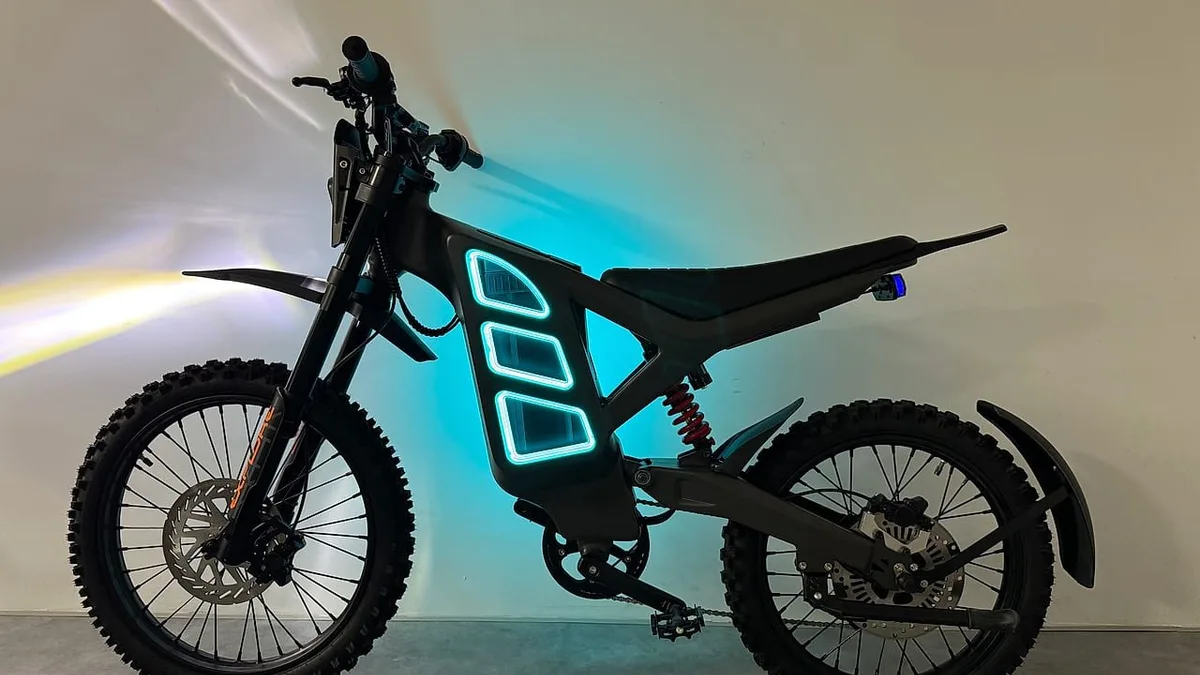
When you're sourcing e-bikes, the motor wattage on the spec sheet is only half the story. The other half is whether the factory behind that motor can actually deliver consistent units at scale, with the certifications your market requires and the component traceability your after-sales team will need. This e-bike motor wattage guide for importers focuses on the factory capability and supply chain checks that separate a reliable partner from a costly experiment.
## Start with the motor line, not the motor label
Ask to see the motor assembly and testing area on a live video call or during an audit. A factory that merely bolts imported motors onto frames is different from one that winds stators, calibrates controllers, and runs dynamometer tests in-house. For a 250W European commuter model and a 1000W cargo unit, the test protocols should differ: continuous load, peak handling, thermal rise, and waterproofing. If the factory sells models like the JIUYUE GT600 20in Pro, ask which motor variant it ships for CIS vs. EU orders and whether the controller firmware is locked to that wattage. Factories that assemble multiple power classes on the same line need clear changeover procedures, or you'll see 500W controllers in 750W boxes.
## Audit the production lines and component sourcing
A real factory audit covers more than a showroom. Look at SMT lines for controllers, battery pack assembly (spot welding, BMS testing), frame welding and painting, and final assembly. Ask for the bill of materials for two models and trace the cells, BMS, display, and motor supplier. Tier-1 cells from Samsung, LG, or CATL cost more but reduce warranty claims; unbranded cells are where margins quietly disappear. For a model like the EBike Factory XT-1000, confirm whether the 48V 20Ah pack uses branded cells and whether the BMS is rated for the controller's peak current. Also check incoming inspection records: a factory that doesn't log cell batch numbers can't help you when a container of packs fails in year two.
## QC and certification: what buyers actually ask
"Do I really need UL 2849 to sell in the US?" Yes, for most retail channels and increasingly for insurance and liability reasons. For Europe, EN 15194 is the baseline, and the battery pack should carry UN38.3 plus IEC 62133. Ask the factory for current test reports, not expired certificates, and verify the certificate holder name matches the factory or your brand. A common Reddit question is "What MOQ should I expect from a real factory?" For a standard model with existing tooling, 50–100 units per color is realistic; for custom frames or new motor specs, expect 300–500 units and 45–60 days lead time after sample approval. If a supplier promises 10 units with custom branding in two weeks, you're likely talking to a trading company.
## Supply chain reality: lead times, spare parts, and shipping regions
Motor wattage affects more than speed—it changes your spare parts profile. Higher-wattage models need heavier controllers, thicker wiring, and more robust racks. Ask what percentage of spare motors, controllers, and chargers the factory holds for warranty, and whether they can ship a mixed spare-parts container with your bike order. For CIS and Middle East buyers, confirm 220–240V charger compatibility and dust/sand protection ratings; for South America and Africa, check whether the factory has experience with 60Hz charging environments and high-temperature battery derating. A typical 40HQ container holds 120–150 assembled e-bikes depending on model and packaging; if the factory quotes 200, ask for the packing diagram.
## Closing takeaway
Before you sign a PO, get three things in writing: the exact motor and controller pairing per SKU, the certification files with valid dates and holder names, and the factory's warranty and spare-parts commitment. Wattage is a number; the factory behind it is the real product. Visit or video-audit the line, trace the BOM, and test a production sample—not a golden sample—before you commit a container.