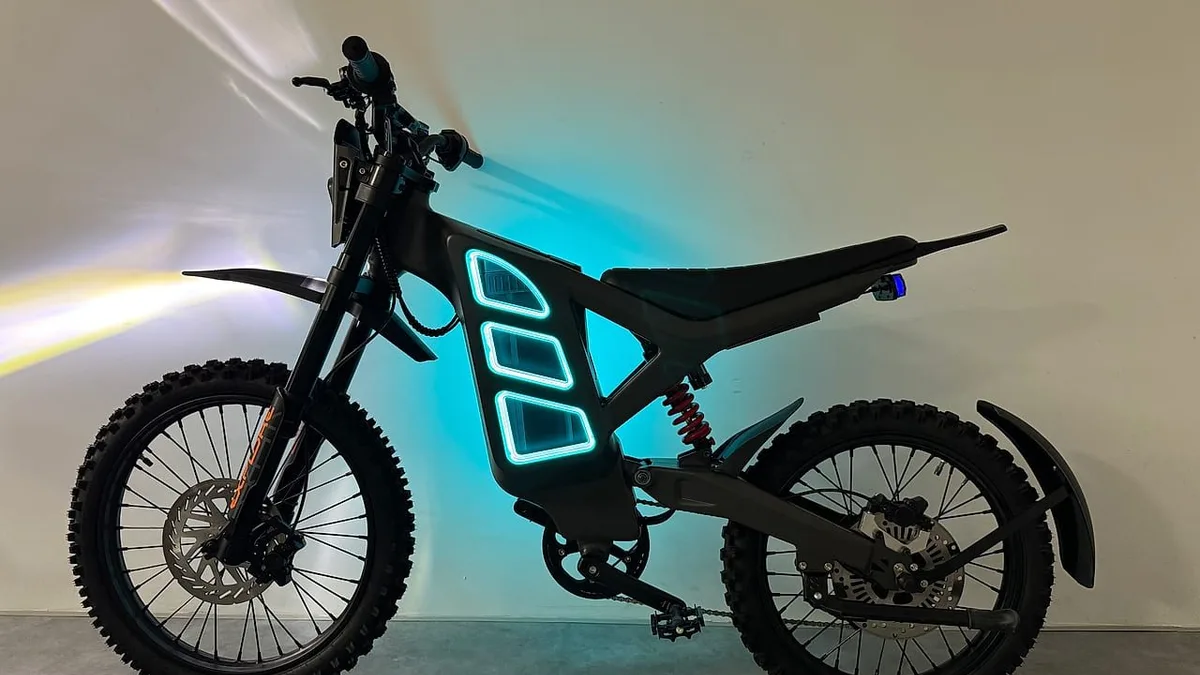
For distributors, importers, e-bike brands and retail chains, choosing the right fat tire e-bike wholesale supplier is a strategic decision that affects margins, customer satisfaction and after-sales costs. Fat tire models are in demand across CIS, Middle East, South America, Africa and Europe because they handle mixed terrain, poor roads and heavy loads. But not every factory is set up for B2B volume, OEM customization and export compliance. This guide covers what to verify, how to compare specs, and how to structure a wholesale or private-label order.
## Why fat tire e-bikes matter for distributors and importers
Fat tire e-bikes (typically 20" or 26" tires, 4.0" wide) are a high-margin category because they appeal to both leisure riders and utility users. In CIS and Africa, they cope with unpaved roads and winter conditions. In the Middle East, they suit desert and beach tourism. In South America, they handle rough urban infrastructure. For a distributor, this means one platform can serve multiple customer segments with minimal SKU complexity.
However, fat tire e-bikes are heavier and more expensive to ship than standard models. A reliable wholesale supplier must therefore offer stable packaging, realistic battery documentation and consistent motor specs. Buyers should treat the factory as a long-term partner, not a one-off seller, because spare parts (tires, controllers, displays, batteries) drive repeat revenue.
## Key specs that matter: motor, battery and certification
Motor power is the first filter. Most wholesale fat tire e-bikes use 250W–750W hub motors or 500W–1000W mid-drive units. For EU markets, 250W continuous with 25 km/h cutoff is the legal baseline. For CIS, Middle East, South America and Africa, 500W–1000W is common, but check local registration rules. Ask the supplier for continuous and peak power figures, torque, and whether the controller is programmable.
Battery capacity and cell quality decide warranty risk. Typical packs are 48V 13Ah–20Ah or 52V 15Ah–20Ah. Confirm cell brand (Samsung, LG, Panasonic, or tier-2 Chinese cells), BMS specification, and whether the pack is certified to UN38.3 for transport. For EU, request EN15194 and CE documentation; for other regions, ask for relevant test reports. Certification is not a formality—it protects you from customs delays and liability claims.
## Buying and verification checklist before you commit
Before placing a bulk order, request a sample and verify the following: frame welding quality, tire brand and puncture resistance, brake type (hydraulic vs mechanical), display functionality, and battery lock mechanism. Check that the motor is marked with the correct voltage and power, and that the controller matches the display protocol.
Ask for a pre-shipment inspection report and a video of the actual production line. Confirm the supplier’s warranty terms: typically 12–24 months on frame, 12 months on motor and battery, with clear spare-parts pricing. Also verify export experience to your region—CIS buyers should ask about EAC documentation, Middle East buyers about SASO or local standards, and EU buyers about CE and battery recycling compliance.
## MOQ, pricing and the B2B order process
MOQ for fat tire e-bikes varies by factory. For standard models with existing tooling, MOQ may be 20–50 units per model/color. For OEM frames or custom battery packs, expect 100–300 units. Pricing depends on motor brand, battery capacity, brake type and order volume. Always ask for FOB and CIF quotes to compare freight options.
Shipping regions matter: CIS orders often move by rail or truck via Kazakhstan; Middle East via Jebel Ali; South America via Santos or Callao; Africa via Durban or Lagos; Europe via Rotterdam or Hamburg. Confirm the supplier can provide export packaging (thick cartons, foam, battery UN38.3 labels) and handle container loading efficiently. A good wholesale supplier will also offer a mixed-container option so you can test multiple models without committing to a full container per SKU.
## How OEM and private-label orders work
Private-label fat tire e-bikes usually start with a standard frame platform. You choose motor, battery, brake, display, color and decals. The factory provides artwork templates; you approve a sample before mass production. Lead time is typically 30–45 days after sample approval, plus shipping.
For full OEM (custom frame or geometry), expect higher MOQ, tooling costs and a longer development cycle (60–90 days). Ask for a written spec sheet, a bill of materials with brand names, and a quality control plan. Clarify who owns the mold and whether the supplier will support spare parts for 3–5 years. A transparent OEM process reduces after-sales friction and protects your brand reputation.
Choosing a fat tire e-bike wholesale supplier is about more than price per unit. Verify specs, certification, warranty and export experience, then start with a sample and a mixed container. Distributors who treat the factory as a partner—with clear specs and realistic MOQs—get better pricing, faster spare parts and fewer warranty headaches.