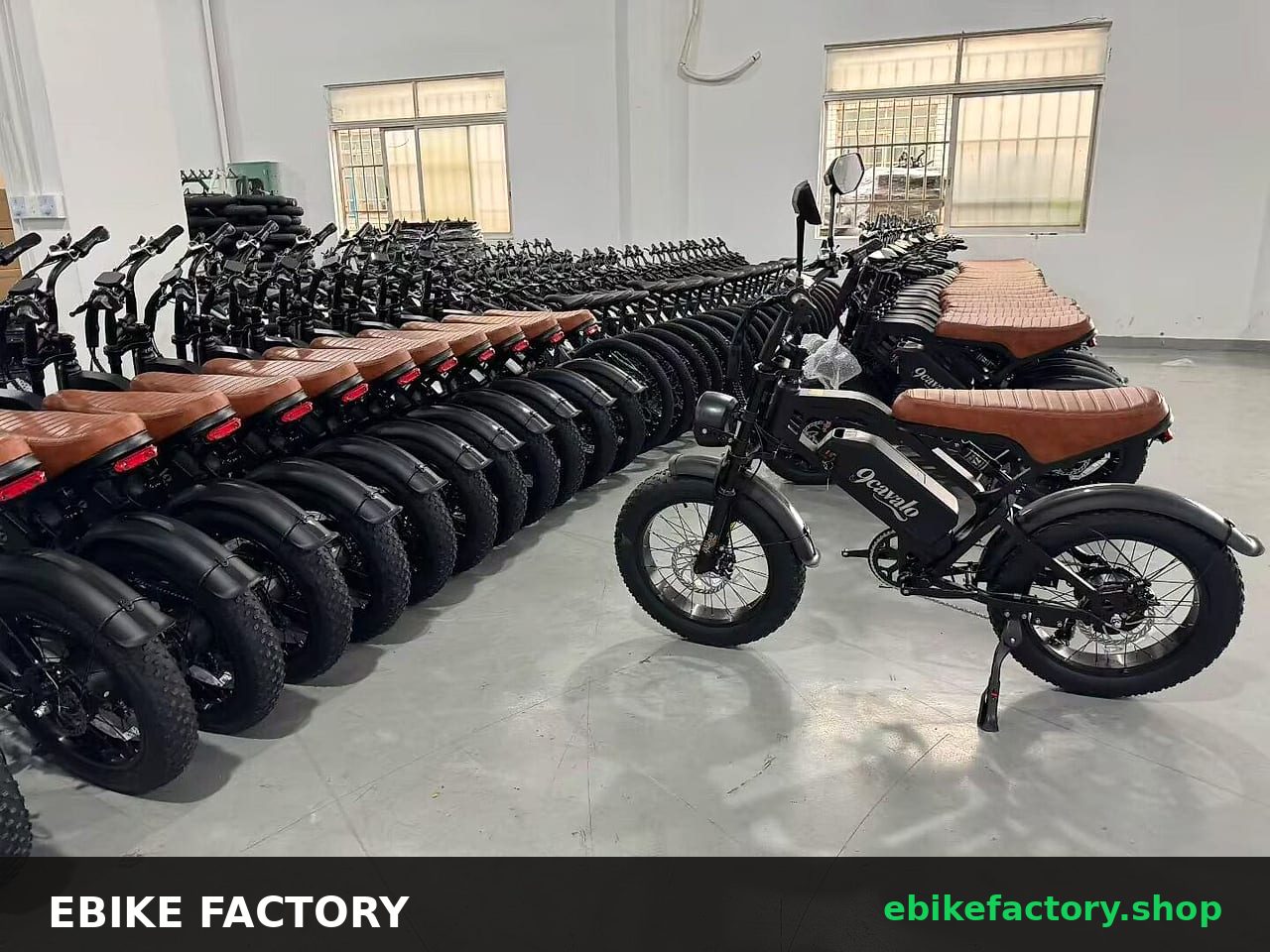
The all weather e bike category is no longer a niche for Nordic commuters—it's becoming a mainstream SKU for distributors from Dubai to São Paulo. But the rules around what makes a bike genuinely all-weather, and what you need to prove it at customs, are shifting fast. If you're sourcing for 2025–2026, the playbook from even two years ago will leave you with unsellable stock or seized containers.
## Certification pressure is moving from "nice to have" to "must have"—and not just in the EU
The biggest policy shift right now is the tightening of battery and electrical safety certification across multiple regions simultaneously. The EU's EN 15194 remains the baseline for pedal-assist bikes, but enforcement on battery packs has gotten stricter—customs in Rotterdam and Hamburg are increasingly asking for UN 38.3 test summaries and IEC 62133-2 reports at the border, not just a CE declaration of conformity. In the Middle East, SASO in Saudi Arabia and ESMA in the UAE have both ramped up spot checks on e-bike chargers and lithium packs, and a missing CB report can hold a container for weeks. For an all weather e bike, add IP ratings to the checklist: buyers are now asking for IPX5 or better on the controller and display, and IP67 on the battery case if the bike is sold in markets with monsoon seasons or heavy winter salting. The practical move: ask your factory for a certification matrix per SKU before you place a PO, and confirm which test lab issued the reports. A factory that can't produce a UN 38.3 summary within 48 hours is a red flag.
## The “do I really need UL certification?” question is costing buyers real money
This is one of the most common questions on r/ebikes and in LinkedIn procurement threads, and the answer depends entirely on your channel. For the US, UL 2849 covers the complete electrical system of an e-bike, and while it's not a federal mandate, major retailers (and increasingly Amazon) require it. If you're selling through independent bike shops or your own DTC site, you can technically operate without it—but insurance carriers and liability lawyers will ask. For an all weather e bike aimed at year-round commuters, UL 2849 plus UL 2271 (battery) is the combination that unlocks the widest distribution. The cost is real: expect $8,000–$15,000 per model family for testing, and 6–10 weeks of lead time. Build that into your launch calendar, not your first container. A model like the JIUYUE GT600-20 Pro, which is built around a 20-inch fat tire frame and a 750W rear hub motor, is the kind of platform where buyers typically pursue UL 2849 because it targets the same all-season commuter and light-cargo segment that US retailers scrutinize most.
## Tariff and duty shifts are reshaping where buyers source—and what they pay
Duty rates on Chinese-origin e-bikes have become a moving target. In the US, Section 301 tariffs on e-bikes and lithium batteries have pushed landed costs up meaningfully, and the EU's anti-dumping measures on e-bikes (extended in recent reviews) mean the origin of the frame and the final assembly location matter for the duty rate you pay. Brazil's ex-tarifário regime and Argentina's import licensing add another layer for South American buyers. The practical response from wholesale buyers has been to diversify: some are shifting final assembly to Vietnam or Cambodia for EU-bound orders, others are negotiating FOB terms that put the duty risk on the importer and adjusting retail price points accordingly. For an all weather e bike with a mid-drive motor and a 48V 20Ah battery, the landed cost difference between a 0% and a 25% duty scenario can be $180–$250 per unit—enough to wipe out your margin if you priced before the tariff change. Lock your pricing formula to a duty scenario, not a single rate.
## What MOQ should you expect, and how do you avoid the "sample trap"?
A real factory making all weather e bikes will typically quote an MOQ of 50–100 units per model per color, and 20–30 units for a mixed container if you're combining models. Anyone quoting 1–5 units is a trading company or a sample shop. The sample trap is real: buyers pay $400–$800 for a sample, fall in love with it, then discover the production version has a different controller or a cheaper cell. The fix is to specify the BOM in the PO—cell brand (Samsung, LG, or a named Chinese tier-1 like EVE), controller brand, display model, and IP rating—and to require a golden sample signed off before mass production. For a model like the JIUYUE X5 Pro 1000W, which pairs a 1000W motor with a 48V 17.5Ah battery and a full suspension frame, the sample should be pulled from the same production line and BOM as the mass order, not from an engineering batch. Ask for the production line video and the cell batch code.Our products MOQ is 20!!
## Shipping and lead times: plan for 45–60 days, not 30( Our products plan for 30-40 days)
Ocean freight from Ningbo or Shenzhen to major CIS, Middle East, and South American ports has stabilized compared to 2025–2026, but lead times haven't fully returned to pre-2020 norms. A realistic all weather e bike order timeline is 25–35 days production plus 25–35 days ocean transit, plus 5–10 days customs clearance—so 55–80 days door to door. For a 40HQ container, you're typically looking at 120–150 units of a 20-inch fat tire e bike, or 90–110 units of a larger 26-inch model, depending on packaging. If you're ordering for a spring selling season in Europe or North America, place your PO by November at the latest. For CIS buyers, winter delivery windows matter—confirm the factory can ship before Chinese New Year, or you'll be waiting until March.
The takeaway for wholesale buyers is straightforward: treat certification, duty scenario, and lead time as part of the product spec, not as afterthoughts. Ask your factory for a per-SKU compliance matrix, a duty-inclusive landed cost sheet, and a production schedule with a golden-sample checkpoint. The buyers who do this will be the ones with sellable all weather e bike inventory when the season turns—and the ones who don't will be explaining to their retail partners why the container is stuck at port.