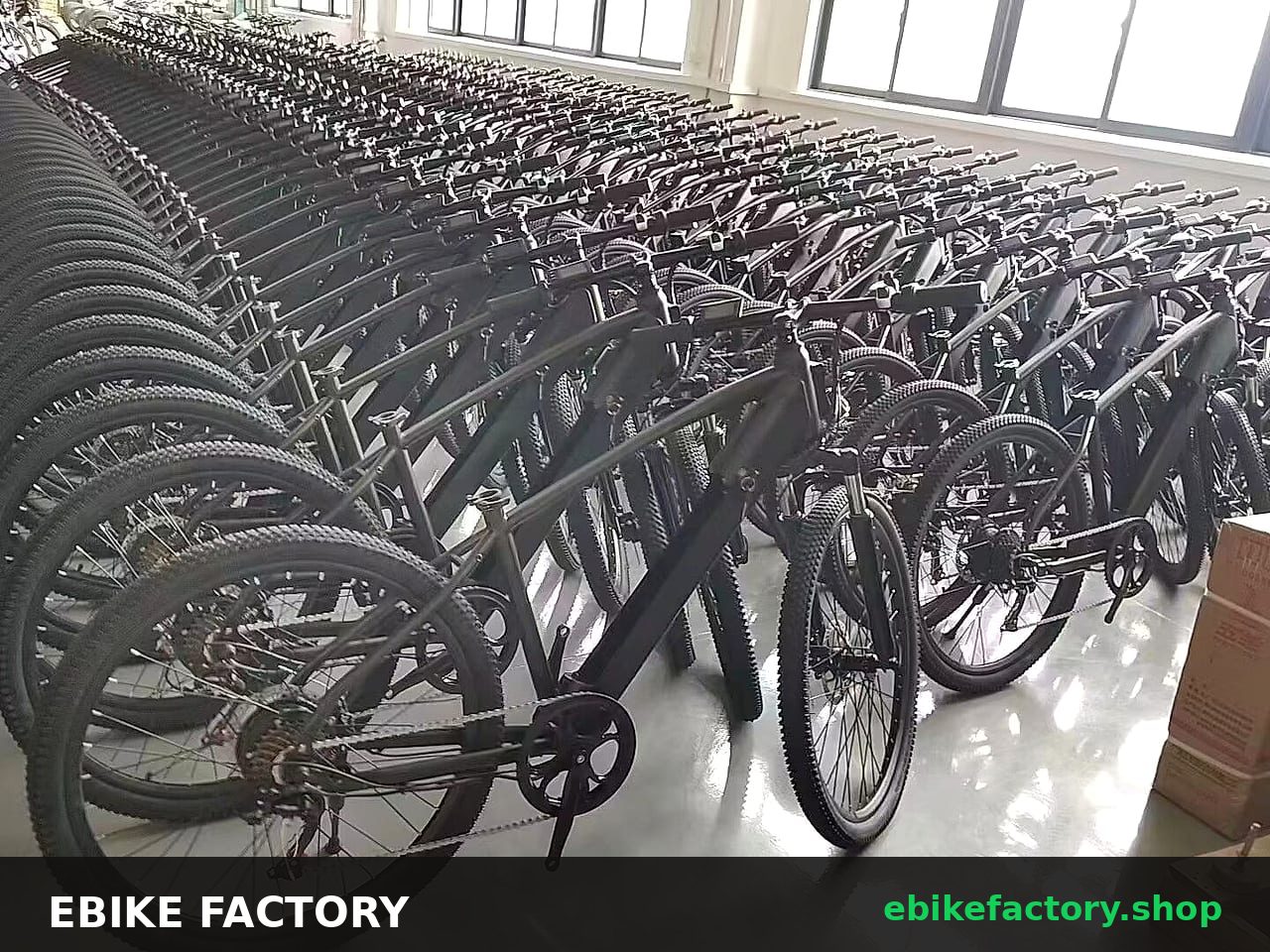
The off road e bike segment is one of the fastest-growing categories in the global e-bike market, driven by demand from adventure enthusiasts, utility users, and last-mile logistics in regions with poor road infrastructure. For distributors, importers, and private-label brands, sourcing the right off road e bike from a factory requires more than picking a model from a catalog.
1、Why off road e bikes matter for distributors and importers
Off road e bikes command higher margins than commuter models because they combine a robust frame, high-torque motor, and long-range battery in a single product. Retail chains in Europe also stock off road e bikes to capture the growing e-MTB and all-terrain market. For importers, the key advantage is product differentiation: a well-specified off road e bike with a powerful motor and durable components can justify a premium retail price while maintaining healthy wholesale margins.
2、 Key specifications that determine performance and price (Key content)
When evaluating an off road e bike, focus on four core components: motor, battery, frame, and drivetrain. Motor power typically ranges from 250W to 1000W, with 500W and 750W being the most common for off road use. Mid-drive motors offer better weight distribution and torque for climbing, while hub motors are cheaper and easier to maintain. Battery capacity is measured in watt-hours (Wh); a 48V 15Ah battery (720Wh) is a common baseline for off road e bikes, providing 40-60 km of range depending on terrain and assist level. Frame material matters: aluminum alloy 6061 is standard for durability and weight, while some premium models use carbon fiber. Drivetrain components from Shimano or SRAM add cost but improve reliability. Also check the suspension: a front suspension fork with at least 100mm travel and fat tires (26x4.0 or 27.5x3.0) are typical for off road e bikes.Our products Motor 2000W,60V 30Ah lithium,Meet all needs.
## Certification and compliance checklist
Certification is non-negotiable for legal import and sale. For the European market, off road e bikes must comply with EN 15194 (EPAC standard) and carry CE marking. In the CIS region, EAC certification (TR CU 010/2011 for machinery safety and TR CU 004/2011 for low-voltage equipment) is required. For the Middle East and South America, check local standards such as SASO in Saudi Arabia or INMETRO in Brazil. Always request the factory's test reports for motor, battery, and charger, and verify that the battery cells come from a reputable supplier (Samsung, LG, Panasonic, or CATL). A factory that cannot provide valid certification for your target market is a red flag. Also confirm that the off road e bike meets local speed and power limits, as some countries restrict throttle use or require pedal-assist only.
## How to start a private-label or OEM order
Private-label and OEM orders allow you to build a unique off road e bike brand without owning a factory. The process starts with selecting a base model from the factory's catalog, then customizing frame color, decals, battery capacity, and components. Most factories require a minimum of 50-100 units for custom branding, and tooling costs may apply for frame modifications. Provide clear specifications and request a prototype before mass production. A reliable factory will offer design support, including frame geometry adjustments and component upgrades. For OEM orders, you can specify motor brand (Bafang, Shengyi, or Tongsheng), battery cell brand, and display type. Always sign a contract that covers quality standards, inspection rights, and penalties for non-conformance. Starting with a small private-label batch is a low-risk way to test your market before scaling.
Sourcing an off road e bike from a factory is a strategic decision that affects your margins, brand reputation, and customer satisfaction. Prioritize factories that provide transparent certification, consistent quality, and flexible MOQ terms. By focusing on motor power, battery capacity, and compliance, you can build a product line that meets the demands of distributors and importers in CIS, Middle East, South America, Africa, and Europe.