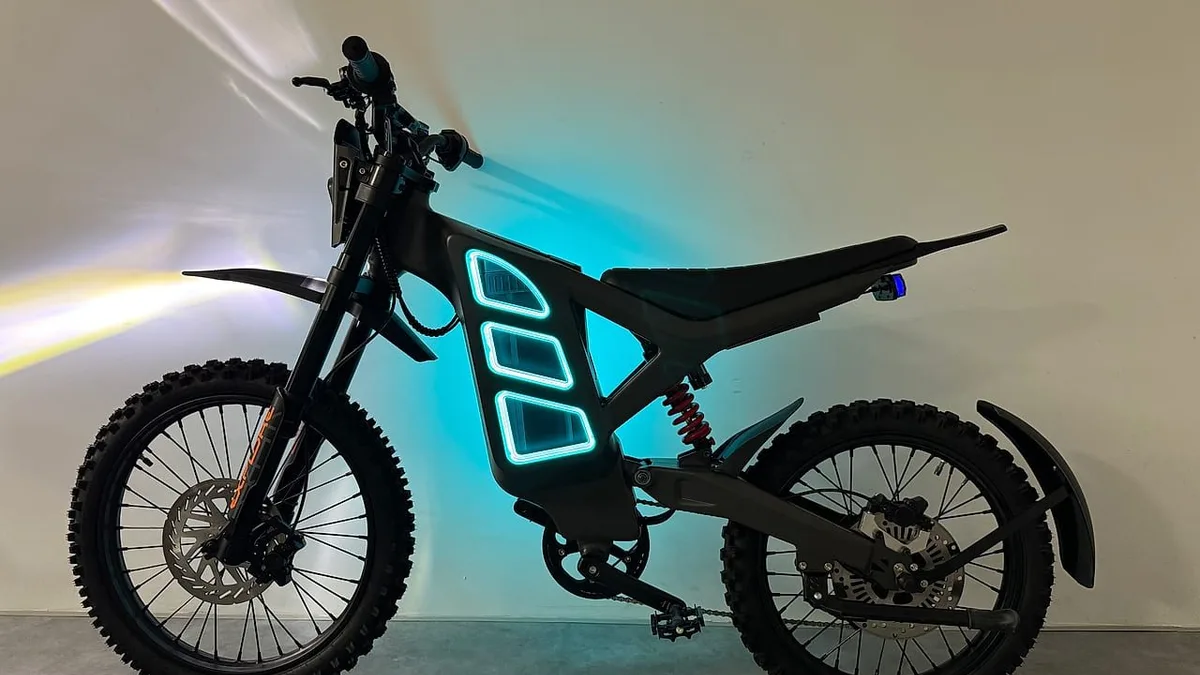
Sourcing off-road electric bikes factory direct is one of the fastest ways to improve margin and control quality—but only if you know what to verify before you wire a deposit. This guide is written for distributors, importers, e-bike brands, and retail chains across the CIS, Middle East, South America, Africa, and Europe who want a reliable off-road e-bike supply partner, not just a low price. Below we cover the specs that actually matter, a practical factory verification checklist, MOQ and order flow, and how private-label/OEM programs work so you can launch or scale a credible off-road line.
## Why buying off-road e-bikes factory direct matters for distributors and importers
Off-road e-bikes are a high-margin, high-support category. Riders expect torque, range, and durability, and they punish weak frames, undersized batteries, and unclear certification. When you buy through layers of trading companies, you lose visibility into the actual motor/battery pairing, frame supplier, and test regime—and you pay for every intermediary. Factory-direct sourcing gives you control over the bill of materials, the ability to lock specs across repeat orders, and access to real production capacity during peak season.
For importers, the biggest win is consistency: the same controller firmware, the same cell grade, the same dropout spacing, and the same paint process on every container. That consistency reduces warranty claims and returns, which is where off-road e-bike profitability is often won or lost. Factory direct also lets you negotiate realistic MOQs, schedule production around your freight windows, and get spare parts (motors, controllers, displays, battery packs) from the same line that built the bikes.
## Key specs that matter: motor, battery, frame and certification
Start with the drive system. For off-road use, a 750W–1000W mid-drive or a 1000W–1500W hub motor is common, but what matters more is continuous vs peak rating, torque (Nm), and thermal behavior under load. Ask for the motor’s continuous power, peak power, max torque, and the controller’s current limit. A 1000W motor paired with a weak controller and a 48V 15Ah battery will feel gutless on climbs; a well-matched 750W mid-drive with a 48V 20Ah pack often outperforms it.
Battery quality is the second make-or-break item. Confirm cell brand and grade (e.g., Samsung, LG, Panasonic, or tier-1 Chinese cells), pack voltage and capacity (48V/52V, 15Ah–25Ah), BMS continuous discharge current, and whether the pack is UL 2849 / EN 15194 aligned for your market. For off-road models, check water resistance (IP54 or better), mounting security, and whether the pack is removable and lockable. Frame and chassis: verify material (6061 aluminum is standard), welding quality, dropout width, and whether the frame is tested to ISO 4210 or a comparable standard. Suspension travel, brake type (hydraulic disc minimum for off-road), and tire/wheel spec should match your target terrain.
Certification is non-negotiable for serious buyers. For Europe, EN 15194 and CE marking plus battery transport UN 38.3 are baseline; for the US, UL 2849 and UL 2271 for batteries are increasingly required by retailers and insurers. Ask for test reports, not just certificates, and confirm the reports match the exact model and battery you are ordering. If you sell in the CIS or Middle East, check local import requirements and whether the factory can provide EAC or SASO documentation where applicable.
## Factory verification checklist before you place a deposit
A factory-direct relationship is only as good as your verification. Start with business legitimacy: company registration, export license, and at least three reference customers in your region. Ask for a video walkthrough of the production line, not just a showroom video. Confirm they build frames in-house or name their frame supplier, and ask which motor and battery brands they are authorized to use.
Then verify quality systems. Request the incoming inspection process for cells and motors, the end-of-line test protocol (brake, torque, battery load, water spray), and the warranty policy with real claim data. Ask for a sample order—typically 1–5 units—and test them yourself or through a local mechanic: climb a steep grade, drain the battery, check weld quality, and inspect cable routing and connector sealing. Finally, confirm spare parts availability and lead times for motors, controllers, displays, and battery packs. A factory that cannot supply spares in 30–45 days will cost you more in warranty support than you save on unit price.
## MOQ, pricing and the B2B order process
MOQ for off-road e-bikes factory direct typically ranges from 20–50 units per model/color for standard builds, and 50–100 units for custom paint or private-label packaging. Pricing depends on motor/battery spec, frame type, and order volume; expect meaningful step-downs at 100, 300, and 500 units. Always ask for a quotation that separates bike, battery, packaging, and spare parts, so you can compare apples to apples.
Order flow usually looks like this: inquiry and spec sheet → sample order and testing → quotation and proforma invoice → deposit (often 30%) → production and pre-shipment inspection → balance payment → booking and shipping. For freight, confirm Incoterms (FOB, CIF, or DDP), port of loading, and whether the factory can consolidate with your other suppliers. Shipping regions matter: CIS buyers often route via rail or truck through Kazakhstan/Russia; Middle East via Jebel Ali; South America via Santos or Callao; Africa via Durban, Lagos, or Mombasa; Europe via Rotterdam, Hamburg, or Koper. Ask for realistic lead times by region and plan battery shipping separately, since lithium packs are dangerous goods (UN 38.3) and require compliant documentation.
## How OEM and private-label off-road e-bike programs work
Private-label is the fastest way to build a brand without owning a factory. Most off-road e-bike factories offer three levels: (1) logo and packaging only on an existing model; (2) cosmetic customization—frame color, decals, display branding, saddle and grip changes; and (3) full OEM with custom frame geometry, motor/battery selection, and firmware tuning. Level 1 typically needs 50–100 units; level 3 often starts at 200–300 units per model.
To start, prepare a spec sheet with target motor power, battery capacity, frame size, brake type, and certification requirements, plus your target retail price and volume forecast. Ask the factory for a bill of materials and a compliance matrix showing which certificates apply to your destination market. Request a pre-production sample with your branding and test it before mass production. Lock the approved sample as the golden standard, and include it in the purchase contract with clear tolerances. Finally, agree on warranty terms, spare-parts ratios (typically 1–2% of order value), and packaging standards for your region’s logistics realities.
Off-road electric bike factory direct sourcing rewards buyers who verify specs, test samples, and lock documentation before scaling. Focus on motor-battery matching, certification that matches your market, and a factory that can supply spares—then negotiate MOQ and freight with clear Incoterms. Do that, and factory-direct becomes a durable margin and quality advantage rather than a one-off cheap order.