So you're looking at off road ebikes for sale and thinking about placing your first container order. Good — but before you wire a deposit, you need to understand the whole chain: spec sheet, sample, QC, payment terms, and what happens when the container hits your port. This walkthrough is written from the factory floor, not the sales brochure, so you know exactly where the traps are and which checkpoints actually matter.
## Start with the spec sheet, not the price list
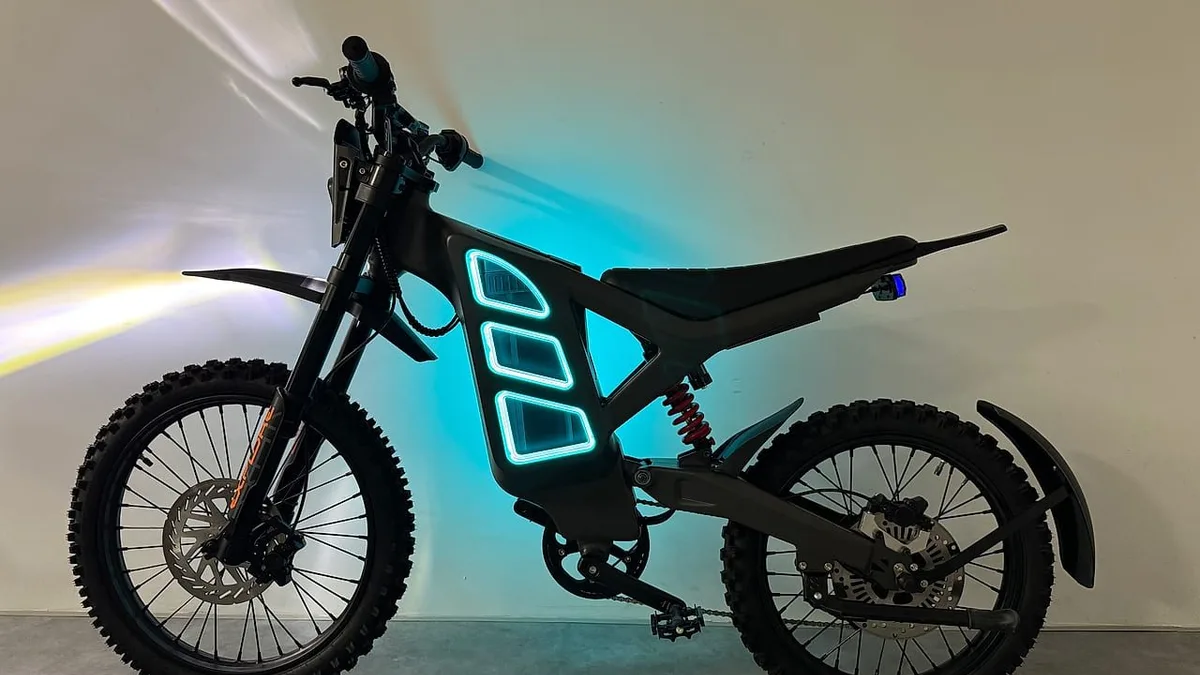
The first thing a serious importer does is read the spec sheet line by line, because that's where the real cost lives. A 48V 20Ah battery sounds fine until you realize the cells are generic Chinese 18650s rated for 500 cycles instead of Samsung or LG cells rated for 800–1000. Ask for the motor's continuous and peak wattage, the frame material and welding standard (TIG vs. robotic MIG), the fork travel, and whether the controller is sine-wave or square-wave. For a mid-drive off-roader, a Bafang M620 or M510 is a known quantity; for hub-drive, a 750W or 1000W rear hub is common in CIS and South American markets. Look at a model like the JIUYUE GT600-20 Pro — 20-inch fat tires, 1000W hub motor, 48V 17.5Ah battery — as a reference point for what a mid-tier off-roader spec sheet should contain. If the factory can't give you a BOM with cell brand, controller model, and brake spec, walk away.
## Order a sample — and test it like a buyer, not a guest
A sample is not a courtesy; it's a $300–$600 audit. Order one unit, pay for it, and put it through 100–200 km of real riding: gravel, mud, a steep climb, a full battery drain. Check the torque sensor response, the brake fade on a long descent, and whether the battery BMS cuts out under load. Then open the battery case and confirm the cells match the spec sheet. A common question on r/ebikes and LinkedIn procurement threads is: "How do I know the sample isn't a hand-picked golden unit?" Answer: ask for the serial number and a photo of the unit on the production line before it ships, and request a second sample from the actual production batch once you place the order. If the factory refuses, that tells you something.
## QC is where first-time importers lose money
Most first-time importers skip pre-shipment inspection and regret it. Book a third-party inspection (SGS, Bureau Veritas, or a local agent) at 100% finished goods, and specify an AQL of 2.5 for major defects and 4.0 for minor. For off-road ebikes, the critical checkpoints are: battery voltage and capacity test, motor wattage verification under load, brake alignment, wheel trueness, and frame weld penetration. Ask for a QC report with photos of every unit's serial number. A realistic lead time from deposit to container-ready is 35–50 days for a 100–200 unit order, plus 25–40 days ocean freight to a Middle East or South American port. If a factory quotes 15 days, they're either lying or shipping from stock they haven't QC'd.
## Payment terms and certifications: the fine print that bites
A common question buyers ask is: "What payment terms should I expect from a real factory?" Standard is 30% deposit, 70% before shipment, via T/T. For first orders, don't accept 100% upfront, and don't accept 100% on delivery unless you've used a letter of credit. For certification, the answer depends on your market: the EU requires EN 15194 and CE marking; the US market increasingly expects UL 2849 for the electrical system, and some retail chains won't touch a bike without it. Middle East and CIS markets are looser but still want a test report. Ask the factory which certifications they already hold — a real manufacturer will have UL 2849 or EN 15194 reports on file, not just a promise to "get it done." If they can't produce a certificate number, budget 4–8 weeks and $2,000–$5,000 for third-party testing before you can sell legally.
## Container arrival: what to check before you sign the delivery note
When the container arrives, don't just count cartons. Open 10–15% of units, check for shipping damage (fork bends, battery case cracks, bent derailleur hangers), and verify the serial numbers match the QC report. Check that the chargers are the correct voltage for your market — a 220V charger in a 110V market is a fire risk and a return. Also confirm the spare parts box: does it include brake pads, a spare controller, and a spare battery? For off-road models, spare batteries are the #1 after-sales request, so negotiate 2–3% spare battery units into the order. If you're sourcing from a factory that also makes the JIUYUE GT600-20 Pro, ask whether the battery pack is shared across models — that simplifies your spare-parts inventory significantly.
The takeaway: treat your first off road ebike order as a 90-day project, not a purchase. Spec sheet first, paid sample second, third-party QC third, payment terms fourth, and a container inspection at arrival. Do those five checkpoints and you'll avoid the two mistakes that kill first-time importers — buying on price alone and skipping inspection.