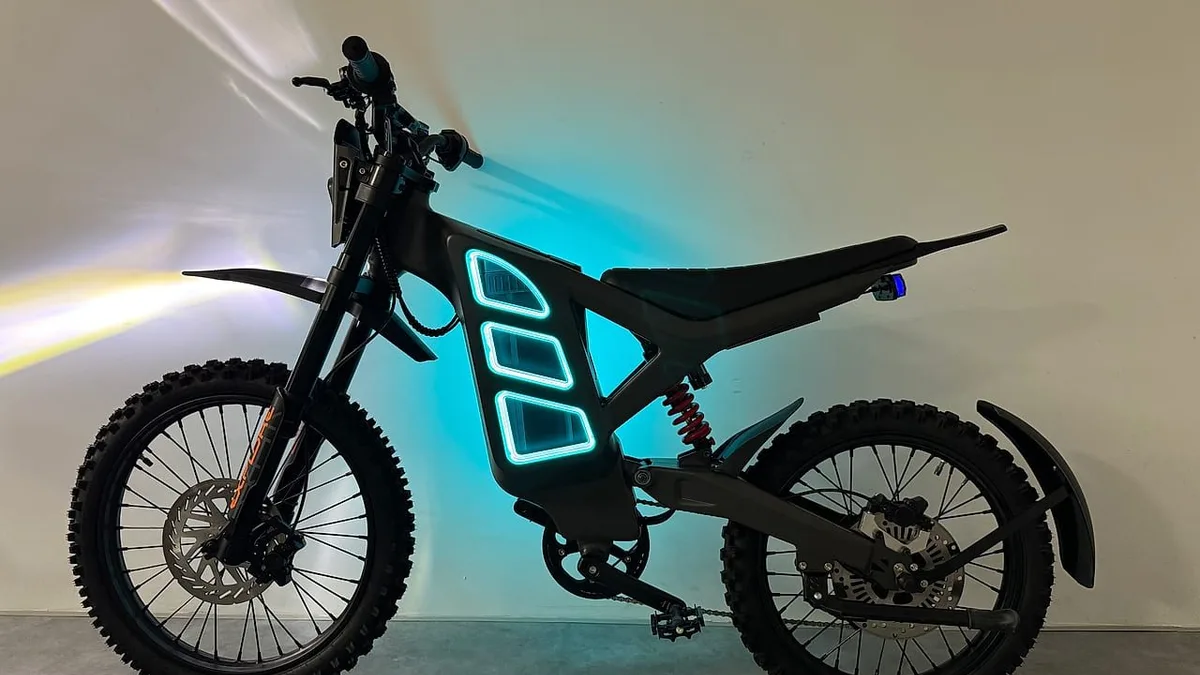
The market for electric bikes for off road use is no longer a niche curiosity—it's a rapidly professionalizing segment with its own supply chains, certification battles, and regional demand quirks. If you're a distributor, importer, or brand owner sourcing wholesale, the old playbook of buying generic fat-tire commuter bikes and slapping an “off-road” label on them is failing. Buyers in the CIS, Middle East, South America, Africa, and Europe are getting smarter, and regulators are catching up fast. The question isn't whether to stock off-road e-bikes, but how to source them profitably without getting stuck with inventory that doesn't meet local rules or rider expectations.
## The certification squeeze: what changed and why it matters for your sourcing
One of the biggest shifts right now is the tightening of certification and import rules for e-bikes that claim off-road capability. In the EU, the EN 15194 standard still governs pedal-assist bikes, but off-road models with throttles or higher power often fall into a gray zone that customs and market surveillance authorities are increasingly unwilling to ignore. The UK's recent push to treat higher-power e-bikes more like mopeds has sent ripples through the wholesale channel. In the US, UL 2849 certification has moved from a nice-to-have to a de facto requirement for many retailers and insurers. A buyer on r/ebikes recently asked, “Do I really need UL certification to sell in the US?” The short answer: if you want to sell through major retail chains or Amazon, yes—and increasingly, even independent shops ask for it. For off-road models, the certification burden is heavier because motor power and battery capacity push you into different test categories. The practical move is to demand test reports and certificates from your factory before you place a PO, not after. A factory that can't produce a UL 2849 report or an EN 15194 certificate on request is a factory that will cost you money at the port.
## Motor and battery specs: the off-road buyer is asking harder questions
Off-road use changes the spec conversation entirely. A 250W hub motor that's fine for city commuting will overheat and disappoint on a mountain trail or desert track. Buyers in the Middle East and South America are increasingly asking for mid-drive motors in the 500W–750W range, paired with 48V or 52V batteries that can deliver real torque and range. This is where product specifics matter. For example, the JIUYUE GT600-20 Pro is a mid-drive off-road model that has become a reference point for distributors who need a balance of climbing power and battery efficiency—its 48V system and robust frame geometry suit both rocky terrain and sandy tracks. On the other end of the spectrum, the JIUYUE XF200-20 is a fat-tire hub-drive option that appeals to buyers targeting budget-conscious off-road enthusiasts who still want a capable machine. The key is not to stock a single “off-road” SKU but to map your catalog to the actual terrain and rider profile in your region. A buyer in Kazakhstan needs different gearing and battery insulation than a buyer in Nigeria. Ask your factory for torque curves, real-world range tests, and battery cell specifications—not just marketing wattage.
## Supply chain and MOQ: what a real factory relationship looks like
Another shift is in how buyers are sourcing. The days of chasing the lowest Alibaba quote are fading for serious distributors. LinkedIn procurement threads are full of complaints about factories that promise 50-unit MOQs and then deliver mismatched controllers or batteries with no UN38.3 documentation. A real off-road e-bike factory will typically ask for 100–200 units per model for a private-label run, and lead times of 45–60 days are realistic for container-volume orders. If a supplier quotes you 20 units and 15 days, they're either trading someone else's stock or cutting corners. For off-road models, the MOQ is often higher because of the complexity of the frame, suspension, and battery pack. One concrete figure: a 40HQ container holds roughly 120–150 assembled e-bikes depending on model size and packaging, so your first order should be planned around container economics, not piecemeal. Ask about spare parts availability—controllers, chargers, and replacement batteries—because off-road riders break things, and your after-sales reputation depends on parts supply. A factory that can't supply a spare controller in 30 days will cost you more in warranty headaches than the unit price difference.
## Regional demand patterns: where the growth is and what it looks like
The demand map for electric bikes for off road use is shifting. Europe remains the largest market by value, but growth is slowing and regulation is tightening, pushing buyers toward higher-quality, certified models. The CIS region is seeing strong interest from outdoor tourism operators and delivery fleets that need rugged bikes for unpaved roads. The Middle East—particularly the UAE and Saudi Arabia—is emerging as a premium market for off-road e-bikes used in desert recreation and resort fleets. South America and Africa are more price-sensitive but growing fast, with importers looking for durable, repairable models that can handle poor road conditions. The common thread is that buyers in all these regions are moving away from generic “fat tire” bikes and toward models with real off-road engineering. That means stronger frames, better suspension, and batteries that can handle temperature swings. Your sourcing strategy should reflect this: don't buy a single container of one model and hope it sells everywhere. Build a small, focused range and test it in one region before scaling.
## Policy and duties: the numbers you can't ignore
Import duties and local content rules are another moving target. In the EU, e-bikes from China face anti-dumping duties that can push the landed cost up by 30–60% depending on the exporter and model. That's why many buyers are looking at factories in Vietnam or Eastern Europe, or negotiating with Chinese factories that have overseas assembly. In South America, Brazil's import taxes on e-bikes are steep, and local assembly incentives are worth exploring. In the Middle East, the GCC has relatively low duties but strict product safety requirements. The practical takeaway is to model your landed cost before you commit to a price point. A $600 FOB off-road e-bike can become a $900 landed unit in the EU after duties, freight, and certification costs. Buyers who ignore this end up with inventory they can't sell at a profit. Ask your factory for HS code guidance and check the latest anti-dumping rates for your destination—these change, and a good export salesperson will flag them before you ask.
## What to do next: a practical sourcing checklist
The smartest move for a wholesale buyer right now is to treat off-road e-bikes as a distinct category with its own sourcing rules. Start by requesting certification documents and test reports for any model you consider. Then ask for real-world range and torque data, not just wattage. Negotiate MOQs around container economics and secure a spare parts agreement. Finally, test one region with a focused range before scaling. The market is moving fast, but the buyers who win are the ones who ask the boring questions early—about certificates, controllers, and customs codes—rather than the ones who chase the lowest quote and pay for it later.