When you place a bulk order for a wholesale small electric bike, the biggest hidden cost isn't the unit price—it's getting the product legally and profitably into your market. Certifications, duties, and local rules vary so much between the EU, US, UK, Australia/NZ, and the GCC that the same container of bikes can be a smooth sell-through in one region and a customs headache in another. This deep-dive breaks down what actually matters for each major destination, so you can spec your order correctly from the factory floor.
## EU: CE marking and EN15194 are non-negotiable for small e-bikes
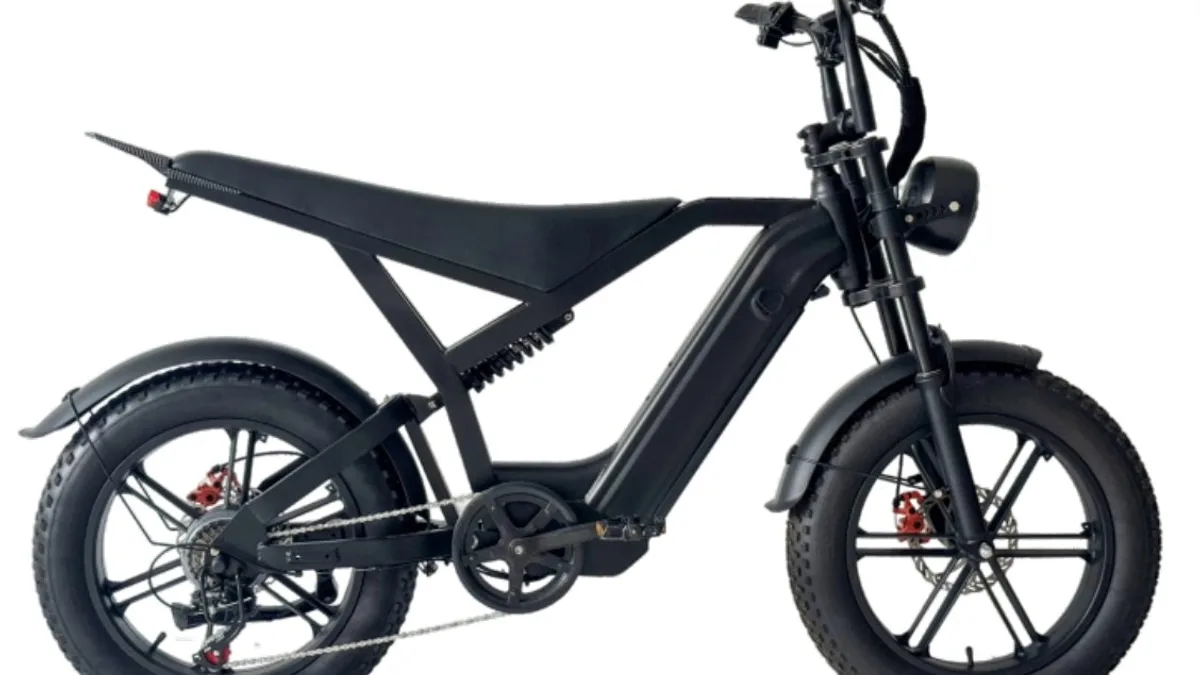
If you're importing into the EU, every small electric bike must comply with EN15194, which covers electric power-assisted cycles up to 250W and 25 km/h. The CE mark isn't just a sticker—it requires a technical file, risk assessment, and often a test report from an accredited lab. For a wholesale small electric bike order, ask your factory for the EN15194 test certificate and a declaration of conformity before production starts. Many Chinese factories now hold these for their EU-specific models; for example, the JIUYUE GT600-20 Pro is available with EU-compliant 250W motor and speed-limited controller, and the factory can supply the full CE documentation package. Duties on e-bikes from China into the EU are currently 79.3% anti-dumping plus 6% standard duty—so verify the HS code and origin carefully. Lead times for EU-certified batches typically run 45–60 days including testing.
## US: UL 2849 and CPSC rules decide whether your container clears customs
A common buyer question on Reddit and LinkedIn is: "Do I really need UL certification to sell in the US?" The short answer: for e-bikes with lithium batteries, yes—UL 2849 (electrical system) and UL 2271 (battery) are increasingly required by retailers, insurers, and even some state laws. CPSC also enforces 16 CFR Part 1512 for bicycle safety, and e-bikes must meet the 750W/20 mph federal definition to avoid being classified as motor vehicles. For a wholesale small electric bike order destined for the US, insist on UL 2849-compliant models and a CPSC test report. The JIUYUE GT600-20 Pro can be configured with UL-certified battery packs for US buyers, and the factory provides the test summary. Expect 30–45 days production plus 30–35 days ocean freight to the West Coast. Anti-dumping duties on Chinese e-bikes are currently 25% plus 2.5% standard—budget for that in your landed cost.
## UK, Australia/NZ, and GCC: different rulebooks, different paperwork
The UK still follows EN15194 for e-bikes but requires UKCA marking instead of CE, and the battery must meet UK safety regulations. For Australia and New Zealand, e-bikes must comply with AS/NZS 1927 and the 250W/25 km/h limit; some states also require helmet laws and power restrictions. In the GCC (Saudi Arabia, UAE, etc.), e-bikes fall under SASO or ESMA standards, and you'll need a certificate of conformity (CoC) per shipment. A frequent buyer question on Quora is: "What MOQ should I expect from a real factory for small e-bikes?" For most Chinese factories, MOQ is 50–100 units per model, but for certified versions with region-specific controllers and chargers, it can rise to 200 units. Plan your first order as a mixed container—e.g., 60% EU-spec, 40% US-spec—to test demand without overcommitting.
## Accessories, spare parts, and the hidden cost of compliance
Don't overlook accessories when calculating compliance costs. Chargers must match regional voltage and plug types, and spare battery packs need the same certification as the bike itself. For a wholesale small electric bike order, negotiate a spare parts kit—controllers, displays, chargers, and at least 2% spare batteries—because replacing a non-compliant charger later can cost more than the part itself. Also ask about frame and motor options: a 20-inch fat-tire frame like the JIUYUE GT600-20 Pro is popular for mixed terrain, but if your market is mostly urban, a lighter 16-inch model may reduce shipping weight and duties. Factories often stock both, so you can mix models in one container.
## Shipping regions and lead times: what to put in your purchase order
Shipping a wholesale small electric bike order depends on the region and certification status. EU and UK shipments need 45–60 days production plus 25–35 days sea freight; US West Coast is 30–45 days production plus 30–35 days freight; GCC and South America can take 50–70 days total. Always specify the destination port, Incoterms (FOB or CIF), and who handles certification in the purchase order. A practical takeaway: before you sign, ask your factory for a compliance checklist per region—EN15194 for EU, UL 2849 for US, UKCA for UK, AS/NZS for AU/NZ, SASO for GCC—and confirm that the model you're ordering (e.g., JIUYUE GT600-20 Pro) has the matching test reports. That single step prevents most customs delays and returns.